Table of Contents
ToggleYou open your course page and see three overdue assignments, a discussion post you haven’t started, and a lecture that still does not make sense. You tell yourself you will catch up tomorrow—but tomorrow becomes next week. At the same time, you may be dealing with stress, burnout, illness, work pressure, or a personal problem that makes it difficult to focus.
Then comes the thought many students have: “What will my professor think if I ask for help now?”
You may worry that your professor will think you are lazy, unprepared, or not capable of completing the course. You may also feel uncomfortable explaining a personal situation to someone you have only interacted with through emails, discussion boards, or recorded lectures.
But struggling does not mean you have failed. Your professor may not know that you are confused or falling behind unless you tell them. A simple message can help you understand a difficult topic, make a plan for missed work, or find the right academic and personal support.
In this guide, you will learn how to talk to your professor when you’re struggling in an online class, how to write an honest but professional email, how to ask for an extension, and what to do if you do not receive a reply.
Key Takeaways: What to Do If You Are Struggling with Online Courses
- Make an appointment and talk to your professor. Whether you are struggling with classes, mental health issues, or other personal problems, sharing with your professor or TA helps you tackle the situation better.
- Break large tasks into smaller, manageable chunks so you can actually accomplish something. Give yourself credit and celebrate small wins to get a sense of accomplishment.
- Check campus resources for study materials, tutorials, and tutoring, and also connect with a campus counselor for support with your mental health.
- Read the instructions properly before starting an assignment and review the assignment against the instructions before submitting so you don’t lose points by missing criteria in your professor’s rubric.
- Outsource lower-priority tasks to an academic helper so you can focus on learning.
When Should You Actually Talk to Your Professor: The Signs
Before you learn how to talk to your professor when you’re struggling, you need to understand the signs that tell you to call for help:
- You are a good student, but lately you have been struggling to understand the concepts.
- You’re dealing with a personal emergency, you have hit burnout, or you are simply ill, so you cannot concentrate on your studies.
- You are failing your online classes because you have lost interest in a subject that used to be your passion.
- You have already missed deadlines and are about to miss one more because you do not understand an assignment question or grading rubric.
- You have no academic recovery plan and don’t know how to catch up after falling behind.
- Your class’s LMS is confusing: you can’t find your way around it, and you don’t know how to fix technical problems.
If you recognize these signs, contact your professor before you fall further behind.
Support Strategies for Different Types of Online Students
| Student situation | What may be affecting coursework | What to ask your professor or adviser |
| Busy professionals | Work schedules, meetings, overtime, or changing shifts may leave little time to study. | Ask about office-hour options, upcoming deadlines, and how to prioritize missed coursework. |
| Military personnel | Training, duty schedules, relocation, or deployment may affect availability and study plans. | Briefly explain the scheduling issue and ask which university office or support service can help with course-related arrangements. |
| Nursing students | Clinical shifts, placements, labs, and coursework can make it difficult to maintain a consistent study schedule. | Ask about course policies, available tutoring, and how to prioritize coursework around clinical commitments. |
| Busy parents | Childcare responsibilities or unexpected caregiving needs may disrupt planned study time. | Ask whether there is a realistic way to catch up and which assignments or deadlines should be prioritized. |
| International students | Time-zone differences, language-related difficulties, or unfamiliar course instructions may create additional challenges. | Ask for clarification on course instructions, available language or academic support, and good times to communicate. |
| Student athletes | Training, competitions, travel, or team commitments may occasionally conflict with coursework. | Let your professor or academic adviser know about the scheduling conflict and ask about relevant attendance, deadline, or support policies. |
What Do I Say to My Professor If I'm Struggling in Class?

We understand social interaction in online learning is challenging. So when you need to talk to your professor, you actually do not need to explain your entire situation or write a long apology.
You just need to convey to your professor what you are struggling with, briefly explain what you have already tried, and clearly state what kind of help you need.
Step 1: Start with the Specific Problem
Go straight to the point and explain the specific problem you are facing with the coursework. For instance, say you are taking an accounting class on Pearson MyLab Accounting and can’t understand deferred tax accounting. You also find consolidated financial statements difficult in college accounting.
So, you need to share this with your instructor. You can share the topic or question with your professor and explain the issue. If you vaguely say you are struggling with a concept, your professor will not be able to help with online accounting class.
Step 2: Briefly Explain What Is Affecting Your Coursework
Imagine you just had a breakup or maybe your best friend just moved to another city, and you are extremely heartbroken. If a personal situation is affecting your coursework, you can tell your professor briefly without sharing private details.
Personal problems can happen at any time. You don’t need to go into detail. Just let them know you have been dealing with personal circumstances that are making it hard to keep up with the coursework.
If you need formal academic accommodations, contact your university’s disability or accessibility services office, as they can explain your eligibility and the accommodation process.
Step 3: Show That You Are Trying
If you share your challenges without context, your professor might think you are making excuses. Instead of simply saying you are struggling, show the effort you have already made. Inform your instructor that you have reviewed the lecture recordings and gone through the examples in the textbook, but you are unclear about how to approach the problem efficiently.
For instance, if you are writing a case study or completing a case-based analysis, you can share your research, outline, and even your draft. This shows you have invested time and effort but are falling behind. The professor can also offer strategic help with the assignment.
Step 4: Ask for Something Specific
Now that you have shared everything and given them background on your problem, you need to say specifically what help you need.
This could be clarification on a difficult concept, guidance on an assignment, feedback on where you are going wrong, an office-hours appointment, advice on catching up, information about available extensions or late-work policies, or direction to tutoring or other university resources.
This makes it easier to get the support you need to complete the assignment and finish the coursework without feeling burned out.
Step 5: End Professionally
Of course, you need to end the email professionally to show basic online class etiquette. When you end the email, thank your professor for helping you with the coursework.
How Do I Email My Professor If I'm Struggling in Class?
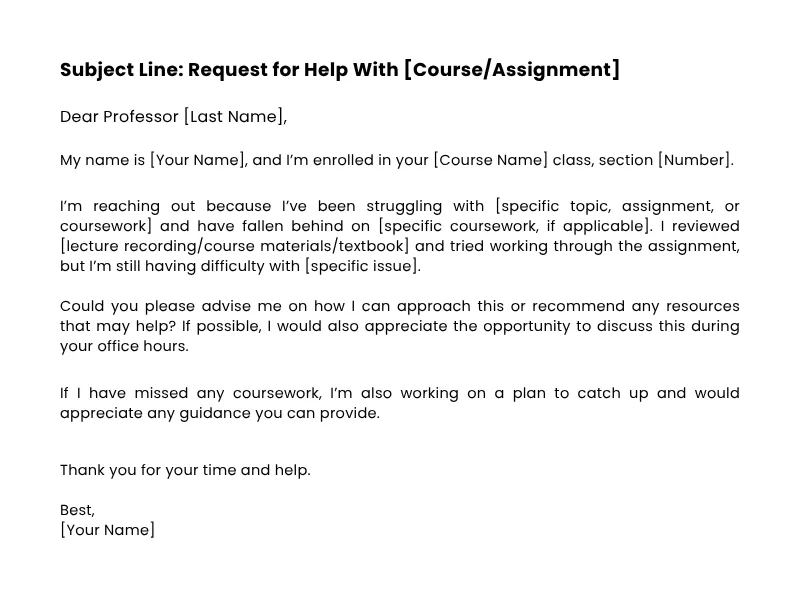
Confused about what to say to your professor when falling behind by email? Well, we have got you. Follow these steps, then use the sample email below:
- Use a clear subject line that directly states why you emailed.
- Address your professor properly by using your professor’s preferred title and last name unless they have specifically asked students to use their first name.
- Introduce yourself by including your name, course, section number, and ID (if applicable).
- Explain the problem without writing a long story; be direct and to the point. Professors hear from many students, so being direct helps them respond faster.
- Mention what you’ve already tried and make a specific request (see Steps 3–4).
Here’s the template for you. Customize the message to fit your situation: